

International Jurisdiction of German Civil Courts
This article deals with the assessment of the jurisdiction of a German civil court in disputes where the parties have not entered into a contractual agreement on the international venue (Gerichtsstandsvereinbarung).
The primary source of law governing international jurisdiction within the EU is the Brussels Ia Regulation (EuGVVO). This Regulation governs the jurisdiction of the courts of a Member State where the defendant is domiciled within the territory of a Member State (Article 6(1) EuGVVO). If this is not the case, the national provisions of the relevant Member State – in this instance, Sections 12 et seq. of the German Code of Civil Procedure (ZPO) – apply by analogy.
The assessment is therefore carried out in two stages: first, the applicability of the Brussels Ia Regulation is examined, followed by jurisdiction under German law.
1. Assessment of the applicability of the Brussels I Regulation
The Brussels I Regulation applies only if the defendant is domiciled in a Member State. The decisive factor is the date on which the action is brought (Klageerhebung). The defendant’s domicile (Wohnsitz) is determined in accordance with Article 62(1) of the Brussels I Regulation under German law, i.e. in accordance with Section 7 of the German Civil Code (BGB)
Relevant criteria for determining domicile under Section 7 of the German Civil Code (BGB):
According to Section 7(1) of the German Civil Code (BGB), domicile presupposes permanent residence in a place as well as the intention to make that place the geographical centre of one’s living circumstances (intention to establish domicile). The decisive factor is the actual real life circumstances, not formal registrations under residence registration law (Melderegister). An official registration with the local authority (Einwohnermeldeamt) may only be taken as an indication, but is not decisive on its own.
The intention to establish a place of residence must be directed towards regarding the place as the permanent centre of one’s life. Temporary stays, for example for professional reasons, do not constitute a place of residence.
The assessment of residence takes into account the person’s overall behaviour as well as external circumstances. In this context, the intention to establish residence does not necessarily have to be expressly stated, but may be inferred from the objective circumstances. A stay of a longer duration or one that is regular may be an indication of the establishment of residence, provided it is linked to a corresponding intention.
A place of residence may also exist if the person regards several places as the geographical centre of their living circumstances. In such cases, the living circumstances must have significant links to both places, so that both places may be regarded as places of residence.
The abandonment of a place of residence presupposes the actual abandonment of the establishment and the intention to terminate the place of residence. A temporary absence does not terminate the place of residence as long as the person intends to return to that place.
If the defendant’s centre of life is outside Germany, German courts do not have international jurisdiction under the Brussels I Regulation.
2. Assessment of international jurisdiction under Sections 12 et seq. of the German Code of Civil Procedure (ZPO)
In such cases, the international jurisdiction of German courts must be examined in accordance with Sections 12 et seq. of the German Code of Civil Procedure (ZPO) (so-called ‘dual-purpose application’).
Sections 12 et seq. of the ZPO are applied in a dual-purpose manner to determine both territorial and international jurisdiction.
In most civil disputes, the jurisdiction provisions of Section 13 of the ZPO (general venue), Section 29 of the ZPO (special venue at the place of performance) and, in some cases, Section 32 of the ZPO (special venue for tort) are relevant.
2.1 Jurisdiction under Section 13 of the ZPO
Under Section 13 of the ZPO, the general venue for proceedings against the defendant is the defendant’s place of residence. If the defendant does not have a place of residence in Germany, jurisdiction under Section 13 of the ZPO is ruled out.
2.2 Jurisdiction under Section 29 of the German Code of Civil Procedure (ZPO)
Irrespective of the defendant’s place of residence, the special venue of the place of performance (Section 29 of the ZPO) may apply.
a. The primary factor in determining the place of performance is where the contractual obligation is to be performed in accordance with the parties’ agreement. The place of performance must be determined separately for each obligation, unless the circumstances of the contract justify the assumption of a common place of performance.
The place of performance is determined by the law applicable to the contractual relationship. It must therefore first be ascertained which law applies to the specific contract. If the contracting parties have not chosen the applicable law, the contract is governed, in accordance with Article 4(2) of the Rome I Regulation (https://dejure.org/gesetze/Rom-I-VO/4.html), by the law of the state in which the party performing the characteristic obligation has its habitual residence.
2.3 Jurisdiction under Section 32 of the German Code of Civil Procedure (ZPO)
In certain scenarios, the last resort for a claimant seeking to establish the jurisdiction of German courts is still Section 32 of the German Code of Civil Procedure (ZPO), namely jurisdiction for claims arising from tort, for example breach of trust (Section 266 of the German Criminal Code (StGB)). The decisive factor here is that there must be an unlawful interference with another person’s legal sphere. Jurisdiction may be based either on the place of the act or on the place where the damage occurred. The place of the act is the place where the act constituting the offence was committed, whilst the place of the consequence is the place where the damage to the legal interest occurred. It is often difficult for the claimant to adduce evidence in such tort claims, as they may, for example, not have access to the defendant’s bank statements to provide concrete proof of the misappropriation of funds.
3. Isolated court ruling on jurisdiction (Entscheidung über die Zuständigkeit)
If jurisdiction is in dispute in an international civil dispute (between Germany and the UK or between Germany and the USA), a party to the proceedings may apply for the court to hear the case exclusively on the issue of jurisdiction in the first instance (Section 280 of the German Code of Civil Procedure).
More on civil litigation and cross-border commercial disputes in these articles:
- https://www.crosschannellawyers.co.uk/guide-to-civil-litigation-in-germany/
- https://www.crosschannellawyers.co.uk/litigation-costs-in-germany-basic-principles-and-an-online-cost-calculator/
- https://www.crosschannellawyers.co.uk/german-commercial-litigation-lawyers-for-uk-businesses/
The German Litigation Experts for English speaking Clients
In the brochure “German Civil Litigation”, litigation attorney Bernhard Schmeilzl, Esq., explains important facts and legal principles. Always, with a focus on practical relevance for UK and US clients who are claimants or defendants in a civil lawsuit in Germany.

After 25 years of experience in international litigation, working mainly for British and American clients, we are well aware of the typical misconceptions held by UK and US business owners and their lawyers. These misconceptions result in poor litigation strategy and – eventually – lost cases in German courts of law.
Our team of German litigation lawyers ensures that you avoid the trap of preparing your lawsuit as you would in the UK or USA when – in fact – you will face a German judge who has entirely different expectations.
Bernhard Schmeilzl is not only a very experienced German trial lawyer but he also knows the English side of things because he has written the only German language textbook on civil litigation in England and Wales (“Der Zivilprozess in England”) published by the renowned BECK Verlag.
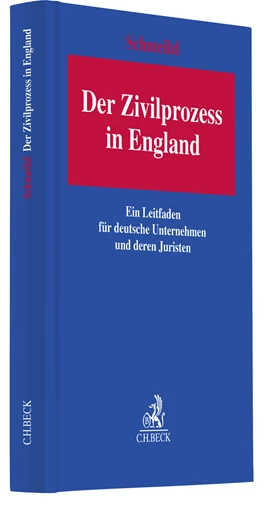
His in depth knowledge of both legal systems and their respective civil procedure rules makes his advice so valuable for litigants from the UK. Bernhard Schmeilzl immediately eliminates any misconceptions and unrealistic expectations the UK party may have, for example about the tool of disclosure, which simply does not exist under German law.

Header picture licensed from Dreamstime.com